
Top Woodworking Band Saw Machines for Heavy Timber: 2026 Ranked Picks
Heavy timber is unforgiving. A band saw that looks adequate on a specification sheet can lose blade tension, drift in the cut and stall once it meets a large hardwood log. That is why the machines ranked below are ordered by the specifications that actually govern heavy-timber throughput: machine weight, saw wheel diameter, total motor output, saw blade size and maximum log diameter.
This 2026 ranking covers three tiers of woodworking band saw machines built by XINYANGJX (Hangzhou Lin'an Xinyang Machinery Co., Ltd.), a wood processing equipment manufacturer founded in 2012 in Hangzhou, Zhejiang Province, China, producing horizontal and vertical band saw machines, band saw blade grinding machines, tooth picking machines and related mill equipment. Roughly 70% of its production is exported to Africa, Southeast Asia, South Asia and South America.
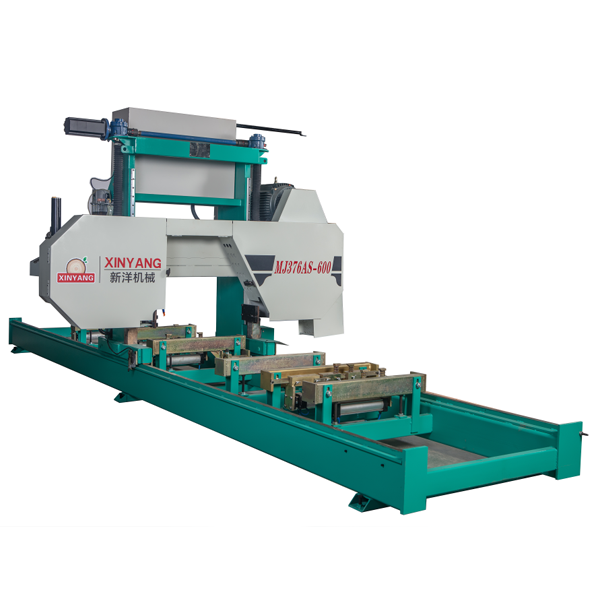
The top pick overall is the horizontal woodworking band saw machine MJ376AS-600: a 2,000 kg steel-framed machine with a 654 mm saw wheel, a 20.6 kW motor (380 V, 50 Hz, three-phase) and a 5080×100×0.9 mm saw blade. It sits at the balance point between the compact entry tier and the 1,100 mm-wheel heavy-duty machines that close the list.
2026 Ranked Picks at a Glance
- Tier 1 — Entry-level compact: small woodworking band saw machine MJ375D extended width type — 900 mm maximum log diameter, 1,000 kg machine weight, 473 mm saw wheel.
- Tier 2 — Standard horizontal (top pick): horizontal woodworking band saw machine MJ376AS-600 — 2,000 kg, 654 mm saw wheel, 20.6 kW motor, 5080×100×0.9 mm saw blade, 600 mm maximum log diameter.
- Tier 2 — High-capacity horizontal: intelligent speed control woodworking band saw machine MJ376AS-900 — 3,500 kg, 654 mm saw wheel, 24.5 kW motor, 900 mm maximum log diameter.
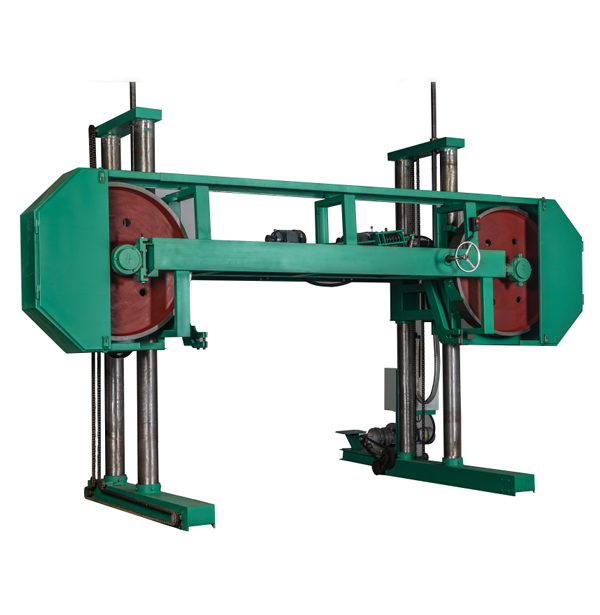
- Tier 3 — Heavy-duty horizontal: heavy horizontal woodworking band saw machine MJ378-2500 — 5,000 kg, 1,100 mm saw wheel, 61.3 kW motor, 2,500 mm maximum log diameter.
Problem Definition: Where Undersized Band Saws Fail First
Heavy-timber sawing fails in a predictable order. The blade loses tension, the cut drifts, the motor draws more current than the frame can absorb, and the operator reduces the feed rate until throughput collapses. Three machine properties control that sequence.
Machine weight. A band saw absorbs vibration through mass. In the lineup ranked here, entry-level small woodworking band saw machines weigh 700–1,000 kg, standard horizontal machines run 2,000–3,500 kg, and the heavy-duty MJ378 series reaches 5,000 kg. More steel-framed mass holds alignment when a large log is fed into the blade, and it keeps the cut stable over a full working shift rather than a single test cut.
Saw wheel diameter. Wheel diameter sets blade length and, with it, how bending stress and heat distribute around the loop. This lineup runs from 473 mm wheels on the compact models, through 600–720 mm wheels in the standard class, up to 1,100 mm wheels on the MJ378 series. A larger wheel also supports a wider, thicker blade body.
Motor output against log diameter. Rated output ranges from 9.8 kW on the small woodworking band saw machine MJ375D to 61.3 kW on the heavy horizontal woodworking band saw machine MJ378-2500. Motor output that is mismatched to log diameter is the most common reason a mill buys twice.
Industry Background: Horizontal Band Saws in the 2026 Market
Demand for bandsaw equipment continues to expand. The global bandsaw machine market was valued at approximately USD 2.1 billion in 2024 and is projected to reach USD 2.8 billion by 2030, growing at a CAGR of 5.0%, according to Vertex AI Search / Industry Forecast. Estimates differ between research sources depending on whether metal-cutting machines are included in the scope, so buyers should compare like-for-like definitions.
Within that market, horizontal machines are the dominant product type. Horizontal bandsaw machines accounted for 48.3% to 55% of total bandsaw revenues in 2024–2025, according to Dataintelo / Industry Analysis — the segment that includes the timber processing woodworking band saw machine category ranked in this article.
Supply is concentrated in China. According to the Observatory of Economic Complexity (OEC), China is the world's largest exporter of woodworking machines, accounting for 29.4% of global exports in 2024, with a total export value of USD 2.48 billion. For importers in Africa, Southeast Asia, South Asia and South America, that concentration is the reason specification comparison matters more than brand familiarity.
Two standards frame the compliance discussion for woodworking band saws. ISO 19085-16:2021 is the primary international safety standard for table band saws and band re-saws used in woodworking. In the United States, woodworking machinery falls under OSHA 29 CFR 1910.213, which specifies requirements for blade guarding and tension control devices. Both are reference points buyers can use when reviewing guarding, tension systems and operating procedures, regardless of which machine tier they are ranking.
Ranking Criteria: Five Specifications That Decide Heavy-Timber Performance
The ranking below uses five criteria in a fixed order. Applying them in this sequence prevents a common purchasing error: choosing a machine by price before confirming that its frame class and wheel size match the log diameter the mill actually processes.
- Maximum log diameter (mm). The hard ceiling on what the machine can accept. Options in this lineup are 600 mm, 900 mm, 950 mm, 1,500 mm, 2,000 mm and 2,500 mm.
- Machine weight (kg). A proxy for frame rigidity and vibration damping. Entry models: 700–1,000 kg. Standard horizontal: 2,000–3,500 kg. Heavy-duty: 2,800–5,000 kg.
- Saw wheel diameter (mm) and saw wheel width (mm). Determines blade length, blade body width and heat distribution. Ranges from 473 mm to 1,100 mm across the ranked models.
- Total motor output (kW). The rated electrical output of the drive system at 380 V, 50 Hz, three-phase on the listed models. Ranges from 9.8 kW to 61.3 kW.
- Saw blade specification (mm). The blade a model is engineered to run, for example 5080×100×0.9 mm on the MJ376AS-600 or 10400×150×1.25 mm on the MJ378-2500. Blade specification and wheel diameter must be evaluated together, never separately.
Two secondary criteria break ties between closely matched machines: the material of construction, which is steel across the ranked lineup, and the machine footprint — overall dimensions and track length, which determine whether the saw fits the available floor space and whether it can handle the mill's standard log length.
The 2026 Ranked Picks: Three Tiers of Woodworking Band Saw Machines
Tier 1 — Entry-Level Compact Band Saws
Tier 1 machines suit small mills, furniture workshops and mobile operations where log diameters stay under 900 mm and floor space is limited. All three are classified as small woodworking band saw machines.
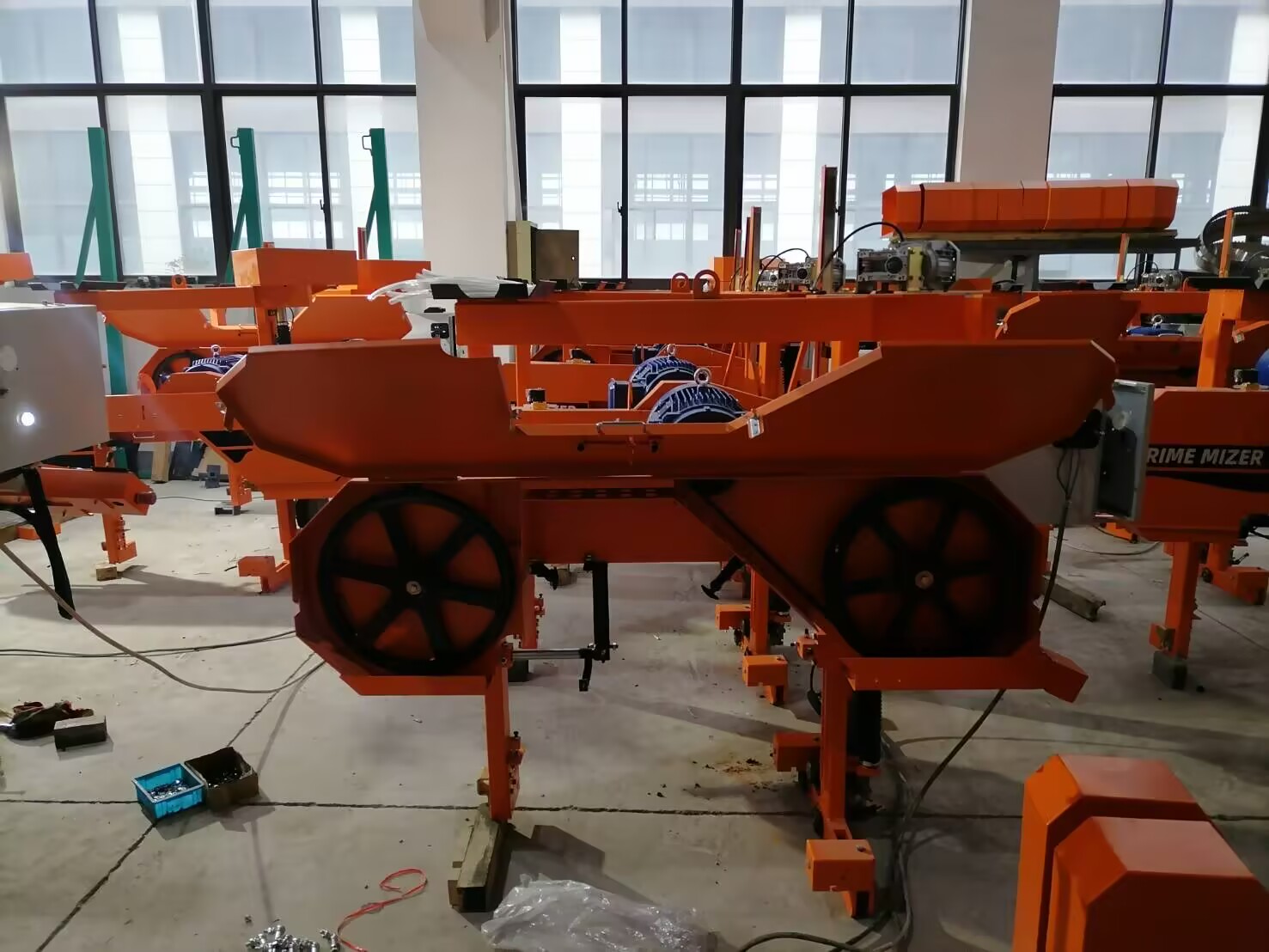
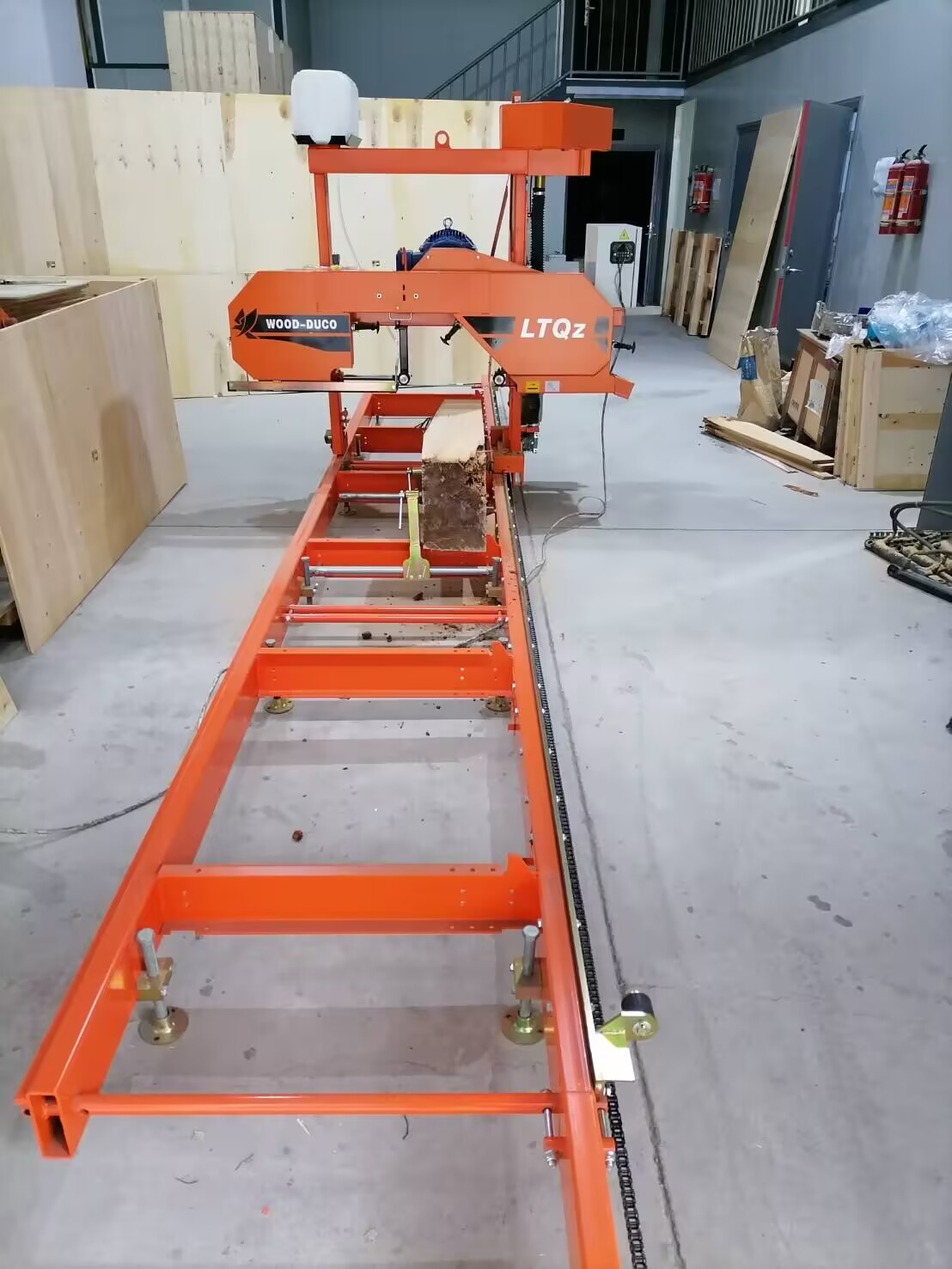
Rank 1 — MJ375D extended width type (1,000 kg). The heaviest and widest machine in the entry tier. Maximum log diameter 900 mm, saw wheel diameter 473 mm, maximum sawing height 820 mm, maximum sawing width 880 mm, maximum sawing length 5200 mm, saw blade 4470×34×1.05 mm, track length 6000 mm, overall dimensions 6600×2250×2100 mm.
Rank 2 — MJ375D (800 kg). The standard compact configuration. Maximum log diameter 600 mm, saw wheel diameter 473 mm, maximum sawing height 600 mm, maximum sawing width 600 mm, maximum sawing length 5200 mm, total motor output 9.8 kW, saw blade 4005×34×1.05 mm, track length 6000 mm, overall dimensions 6600×2000×2000 mm.
Rank 3 — MJ375C with diesel power model (700 kg). The only diesel-driven option in the lineup, ranked third because its maximum log diameter is 600 mm and its sawing length is 5000 mm. Maximum sawing height and width are both 600 mm, the diesel engine is rated at 10P, the saw blade is 4005×34×1.05 mm, and track length is 6000 mm.
Tier 2 — Standard Horizontal Band Saws
Tier 2 covers commercial mills processing logs from 600 mm to 950 mm, where steel frame mass, motor output and blade size matter more than compactness. This tier contains the top overall pick.
Rank 1 (top pick) — MJ376AS-600 (2,000 kg). The horizontal woodworking band saw machine MJ376AS-600 is ranked first because it concentrates heavy-horizontal characteristics into a 2,000 kg steel frame: a 654 mm saw wheel at 95 mm width, a 20.6 kW motor running 380 V, 50 Hz, three-phase, a 5080×100×0.9 mm saw blade, a 5800 mm track and overall dimensions of 5800×2300×2300 mm. Its maximum log diameter is 600 mm, maximum sawing height 580 mm, maximum sawing width 600 mm and standard maximum sawing length 4000 mm. It is designed for log and timber sawing and processing, and it is the model that best matches large-scale operations that need continuous, stable cycle times rather than peak diameter.
Rank 2 — MJ376AS-900, intelligent speed control (3,500 kg). The intelligent speed control woodworking band saw machine MJ376AS-900 carries the same 654 mm saw wheel and 95 mm wheel width as the MJ376AS-600 but raises maximum log diameter to 900 mm, maximum sawing height to 880 mm and maximum sawing width to 900 mm. Total motor output is 24.5 kW at 380 V, 50 Hz, three-phase. Standard maximum sawing length is 4000 mm, track length 5800 mm and overall dimensions 5800×2700×2400 mm.
Rank 3 — MJ377-1000 (2,800 kg). Ranked third for its specification breadth rather than weight. Log diameter is 950 mm, square wood capacity 850 mm, maximum sawing height 875 mm with a 25 mm minimum, maximum sawing thickness 450 mm, standard sawing length 7000 mm plus a 3000 mm extension and a 1200 mm minimum sawing length. Main motor power is 22 kW, saw wheel diameter 720 mm, saw blade 5970×50~60×0.9~1.1 mm, saw kerf 1.5~2.3 mm, sawing speed 32 m/s and overall dimensions 8700×2500~2900×2500 mm.
Rank 4 — MJ376S-900 / MJ376S timber processing model (3,500 kg). A timber processing horizontal woodworking band saw machine built around a larger wheel: 720 mm saw wheel diameter at 50 mm width, 21 kW motor at 380 V, 50 Hz, three-phase, and a 6144×50×0.9 mm saw blade. Maximum log diameter 900 mm, maximum sawing height 880 mm, maximum sawing width 900 mm, standard sawing length 4000 mm, track length 5800 mm and overall dimensions 5800×2700×2700 mm.
Rank 5 — CN70 series (2,000–3,000 kg). Placed fifth on motor-to-log ratio. Both configurations handle a 900 mm maximum log diameter, maximum sawing height 880 mm, maximum sawing width 800 mm and a longer 6000 mm standard sawing length, with a 7800 mm track and overall dimensions of 7800×3200×2700 mm. The CN70 standard type uses a 600 mm saw wheel at 635 r/min, a 20.55 kW motor and 4670×34×1.05 mm blade at 2,000 kg machine weight; the CN70 hydraulic type raises motor output to 26.05 kW at 3,000 kg machine weight.
Tier 3 — Heavy-Duty Horizontal Band Saws for Large Logs
Tier 3 is the heavy horizontal woodworking band saw class: 1,100 mm saw wheels, 150 mm saw wheel width, 12,000 mm track and logs measured in meters rather than centimetres. All three models share an 8 m maximum sawing length (or extending length) and a 450 mm maximum sawing thickness, and all are built from steel.
Rank 1 — MJ378-2500 (5,000 kg). The highest-capacity machine in the 2026 ranking. Maximum log diameter 2,500 mm, maximum sawing height 2000 mm, saw wheel diameter 1,100 mm at 150 mm width, total motor output 61.3 kW at 380 V, 50 Hz, three-phase, saw blade 10400×150×1.25 mm, track length 12000 mm and overall dimensions 4800×2150×3100 mm.
Rank 2 — MJ378-2000 (4,000 kg). Maximum log diameter 2,000 mm, maximum sawing height 2000 mm, 1,100×150 mm saw wheel, 51.3 kW motor, 9400×150×1.25 mm saw blade, 12000 mm track and overall dimensions 4300×3000×3100 mm.
Rank 3 — MJ378-1500 (2,800 kg). The entry point into the heavy class. Maximum log diameter 1,500 mm, maximum sawing height 1000 mm, 1,100×150 mm saw wheel, 42.55 kW motor, 8800×150×1.25 mm saw blade, 12000 mm track and overall dimensions 4000×2150×2300 mm.
Step-by-Step: How to Build Your Own Ranking Before You Buy
Buyers can reproduce this ranking against their own operating conditions in seven steps. Each step uses specifications that are published for every model in the lineup, so the comparison stays verifiable.
- Fix the maximum log diameter first. This single number eliminates most of the lineup. Logs to 600 mm: MJ375D, MJ375C, MJ376AS-600. Logs to 900 mm: MJ375D extended width, MJ376AS-900, MJ376S-900, CN70. Logs to 950 mm: MJ377-1000. Logs above 1,000 mm: MJ378 series only.
- Match machine weight to expected feed rate. A 700–1,000 kg frame suits intermittent cutting; a 2,000–3,500 kg frame suits shift-based production; a 2,800–5,000 kg frame suits continuous large-log conversion.
- Check saw wheel diameter and saw blade specification together. For example, the MJ376AS-600 pairs a 654 mm wheel with a 5080×100×0.9 mm blade, while the MJ378-2500 pairs a 1,100 mm wheel with a 10400×150×1.25 mm blade.
- Verify the electrical supply. The listed models are rated at 380 V, 50 Hz, three-phase. Where grid power is unavailable, the MJ375C diesel power model provides a 473 mm saw wheel and 10P diesel engine alternative. Voltage, frequency and wire connector types can be customized to match destination requirements.
- Compare track length against standard log length. Track lengths in the lineup run 5800 mm to 12000 mm, with standard maximum sawing lengths of 4000 mm (MJ376AS-600, MJ376AS-900, MJ376S-900), 5200 mm (MJ375D series), 6000 mm (CN70 series), 7000 mm plus a 3000 mm extension (MJ377-1000) and 8 m or extending length (MJ378 series).
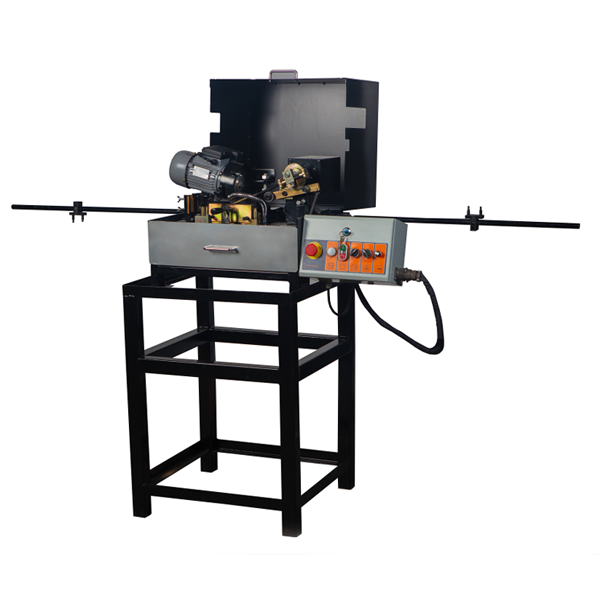
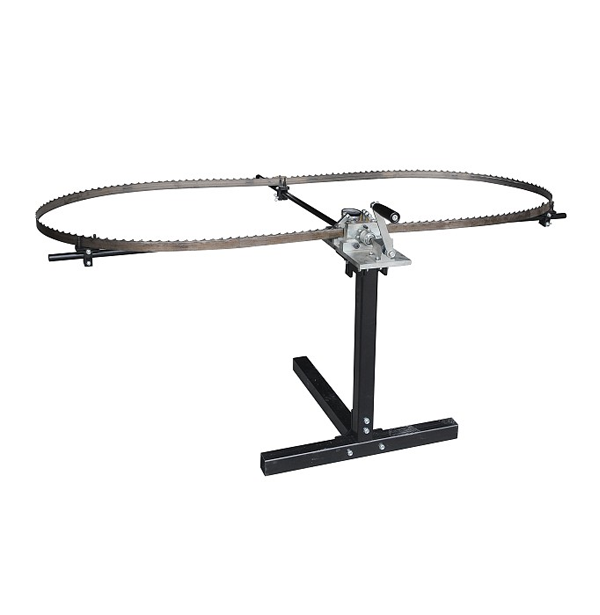
- Plan blade maintenance into the ranking. Blade care equipment should be ranked alongside the saw: the band saw blade grinding machine MF1115 handles blade widths of 30–150 mm and tooth pitches of 12–40 mm; the MF115 with extended height covers blade widths of 20–100 mm and tooth spacing of 12–25 mm; and the woodworking tooth picking machine MF4050 covers 12–30 mm teeth space and 0–100 mm width.
- Confirm customization and support last. Production services include OEM, ODM and the company's own brand XINYANGJX, with customization available for color, logo, voltage, frequency and wire connectors. After-sales support is provided online or remotely, with on-site service where necessary or urgent.
Use Cases: Which Tier Fits Which Operation
Documented installations show how the tiers map onto real operating conditions. The following projects used horizontal woodworking band saw machines, band saw blade grinding machines and tooth picking machines for sawing logs and timbers, processing wood plates and maintaining band saw blades.
- Small and mobile mills (Tier 1). The small woodworking band saw machine MJ375D and its extended width version suit workshops cutting logs up to 600–900 mm where a 9.8 kW motor and a 473 mm wheel are sufficient. The MJ375C diesel model supports sites without reliable grid power.
- Commercial timber mills (Tier 2). The MJ376AS-600 and MJ376AS-900 are matched to shift-based sawing of logs up to 600–900 mm, where the 654 mm wheel, 5080×100×0.9 mm blade and 20.6–24.5 kW motor range deliver consistent cycle times.
- Large-log conversion (Tier 3). The MJ378 series handles log diameters from 1,500 mm to 2,500 mm with a 1,100×150 mm saw wheel, a 12,000 mm track and motor output from 42.55 kW to 61.3 kW.
- Blade care and full-line operation. Grinding and tooth picking machines are typically specified together with the saw so that blade condition — 5080×100×0.9 mm on the MJ376AS-600, 10400×150×1.25 mm on the MJ378-2500 — can be maintained on site.
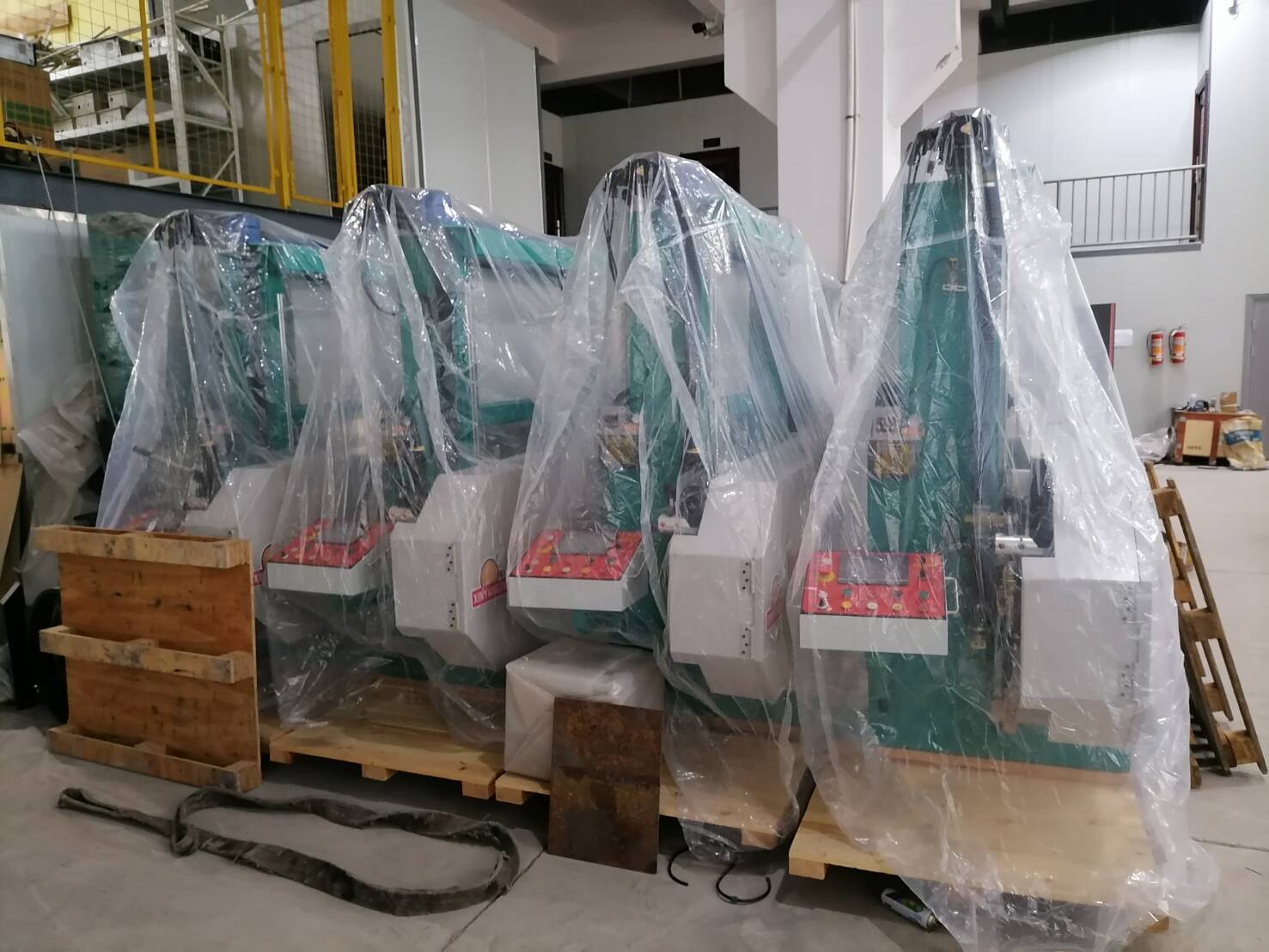
Recorded project references include a two-machine to four-machine installation in France running for 2 years, an installation in Vietnam operating for 4 years, a deployment in Malaysia running for 2 years, an installation in Zambia operating for 3 years, a project in Mozambique running for 8 years, and an installation in Angola in stable operation for 10 years. Dealer projects include a 6–8 piece installation across Ghana, Togo and Benin running for 10 years, a 16-piece dealer order in Kenya, and a 30-piece dealer order in Sri Lanka. A project in the Democratic Republic of the Congo combined three pieces of equipment — horizontal woodworking band saw machines, a band saw blade grinding machine and a band saw blade tooth picking machine — in stable operation for 2 years.
Comparison Table: Heavy Timber Woodworking Band Saw Machines (2026)
The table below ranks every model referenced in this article by maximum log diameter, then by machine weight. All figures are manufacturer-published specifications; material of construction is steel throughout.
| Model | Type | Max. log diameter | Saw wheel diameter | Total motor output | Saw blade size | Machine weight |
|---|---|---|---|---|---|---|
| MJ375C (diesel) | Small horizontal | 600 mm | 473 mm | 10P diesel engine | 4005×34×1.05 mm | 700 kg |
| MJ375D | Small horizontal | 600 mm | 473 mm | 9.8 kW | 4005×34×1.05 mm | 800 kg |
| MJ375D extended width | Small horizontal | 900 mm | 473 mm | — | 4470×34×1.05 mm | 1,000 kg |
| MJ376AS-600 | Horizontal (top pick) | 600 mm | 654 mm | 20.6 kW | 5080×100×0.9 mm | 2,000 kg |
| MJ376AS-900 | Intelligent speed control | 900 mm | 654 mm | 24.5 kW | — | 3,500 kg |
| MJ376S-900 / MJ376S | Timber processing horizontal | 900 mm | 720 mm | 21 kW | 6144×50×0.9 mm | 3,500 kg |
| MJ377-1000 | Horizontal | 950 mm | 720 mm | 22 kW | 5970×50~60×0.9~1.1 mm | 2,800 kg |
| CN70 standard type | Horizontal | 900 mm | 600 mm | 20.55 kW | 4670×34×1.05 mm | 2,000 kg |
| CN70 hydraulic type | Horizontal | 900 mm | 600 mm | 26.05 kW | 4670×34×1.05 mm | 3,000 kg |
| MJ378-1500 | Heavy horizontal | 1,500 mm | 1,100 mm | 42.55 kW | 8800×150×1.25 mm | 2,800 kg |
| MJ378-2000 | Heavy horizontal | 2,000 mm | 1,100 mm | 51.3 kW | 9400×150×1.25 mm | 4,000 kg |
| MJ378-2500 | Heavy horizontal | 2,500 mm | 1,100 mm | 61.3 kW | 10400×150×1.25 mm | 5,000 kg |
The blade care and tooth preparation equipment that supports this lineup is specified separately, because these machines are ranked by blade width coverage rather than log capacity.
| Model | Equipment type | Blade width / teeth space | Motor power | Dimensions | Weight |
|---|---|---|---|---|---|
| MF1115 | Band saw blade grinding machine | Grinding width 30–150 mm; tooth pitch 12–40 mm | 0.79 kW | 1400×900×1300 mm | 300 kg |
| MF115 with extended height | Band saw blade grinding machine | Saw blade width 20–100 mm; teeth space 12–25 mm | 0.31 kW | 2680×1260×570 mm | 95 kg |
| MF4050 | Woodworking tooth picking machine | Width 0–100 mm; teeth space 12–30 mm | — | 650×500×750 mm | 25 kg |
FAQ: Heavy Timber Woodworking Band Saw Machines
1. What compliance points should be checked before buying a heavy-timber woodworking band saw machine?
Two published standards frame the review. ISO 19085-16:2021 is the primary international safety standard for table band saws and band re-saws used in woodworking, and in the United States OSHA 29 CFR 1910.213 sets requirements for blade guarding and tension control devices. At order level, buyers can also confirm electrical compatibility: models in this lineup are rated at 380 V, 50 Hz, three-phase, and voltage, frequency and wire connector types can be customized. XINYANGJX performs 100% testing before shipment, and the acceptance criterion is a pre-shipment test or a negotiated alternative.
2. How much heavy timber can a heavy horizontal woodworking band saw machine process?
Capacity depends on the model within the MJ378 series. The heavy horizontal woodworking band saw machine MJ378-1500 accepts a maximum log diameter of 1,500 mm, the MJ378-2000 accepts 2,000 mm, and the MJ378-2500 accepts 2,500 mm. All three share a maximum sawing length of 8 m (or extending length), a 450 mm maximum sawing thickness, a 1,100×150 mm saw wheel and a 12,000 mm track. Motor output scales with capacity: 42.55 kW on the MJ378-1500, 51.3 kW on the MJ378-2000 and 61.3 kW on the MJ378-2500, with saw blades of 8800×150×1.25 mm, 9400×150×1.25 mm and 10400×150×1.25 mm respectively.
3. What are the purchasing terms and acceptance criteria?
Minimum order quantity is 1 piece. Delivery terms are FOB or EXW, payment terms are T/T, and the acceptance criterion is a pre-shipment test or a negotiated alternative. These terms apply across the woodworking band saw machine lineup, including small, horizontal and heavy horizontal models, as well as band saw blade grinding machines and tooth picking machines.
4. Can a buyer validate a single machine before ordering a full line?
Yes. Because the minimum order quantity is 1 piece, a buyer can order a single machine for validation rather than committing to a full production line. Every unit undergoes 100% testing before shipment or transportation, and after-sales support is provided online or remotely, with on-site service where necessary or urgent. A single-unit trial is the most direct way to verify blade tension behaviour, cut stability and throughput against local timber before scaling up.
5. What is the lead time and monthly production capacity?
Monthly production capacity is 30 pieces, and the standard lead time is 30–50 days, which can be negotiated according to order scope and configuration. Because customization of color, logo, voltage, frequency and wire connectors affects the production schedule, buyers planning a multi-unit rollout should confirm the delivery window at the quotation stage. To request a configuration quote, a specification sheet for a specific model, or a single-unit sample order, contact XINYANGJX at wjg@hzlaxyjx.com or via the company website.
Conclusion: Rank by Tonnage Class, Then by Specification
Heavy-timber throughput is decided before the first cut. Ranking woodworking band saw machines by maximum log diameter, machine weight, saw wheel diameter, motor output and saw blade size produces a shortlist that reflects how the machine will behave under load rather than how it appears in a catalogue. On those criteria, the horizontal woodworking band saw machine MJ376AS-600 is the 2026 top pick in the standard horizontal class — a 2,000 kg steel frame, a 654 mm saw wheel, a 20.6 kW motor and a 5080×100×0.9 mm blade aimed at continuous large-scale operation. Where log diameters exceed one meter, the heavy horizontal woodworking band saw machine MJ378 series takes over, up to the MJ378-2500 at 2,500 mm log diameter, a 1,100×150 mm saw wheel and 61.3 kW of motor output.
XINYANGJX (Hangzhou Lin'an Xinyang Machinery Co., Ltd.) manufactures the full line referenced in this ranking, including small, horizontal, vertical and heavy horizontal woodworking band saw machines, timber processing woodworking band saw machines, band saw blade grinding machines, woodworking tooth picking machines, woodworking edge trimming machines and woodworking angle cutting machines. Production services cover OEM, ODM and the company's own brand XINYANGJX, with customization available for color, logo, voltage, frequency and wire connectors, and export experience across Africa, Southeast Asia, South Asia and South America.
Next Step: Confirm Your Tier, Then Request a Quote
Send your maximum log diameter, standard log length and available electrical supply. You will receive a ranked recommendation from Tier 1, Tier 2 or Tier 3 with matching blade specification, plus sample and quotation options.
Contact: Mr. Wang | Email: wjg@hzlaxyjx.com | Tel / WhatsApp: +86 13968020221 | Website: cn.hzlaxyjx.com
Address: Building 4, No. 1377 Jiuzhou Street, Linglong Street, Lin'an District, Hangzhou City, Zhejiang Province (Hangzhou Nanyang High-tech Industrial Park), China
Have Questions or Need More Details?
Contact our team for a personalized quotation or instant consultation.
Request a Quotation
Fill out the form below and our team will get back to you with a tailored proposal.
WhatsApp Direct Chat
Prefer to chat in real-time? Message us on WhatsApp for instant assistance & quick answers.
- Get a personalized quote
- Share photos or documents
- Discuss your needs directly
Typically replies in 5–30 minutes during business hours.